Precision Metal Stamping
Tight, repeatable features held across long runs, verified against your print before the parts ship.
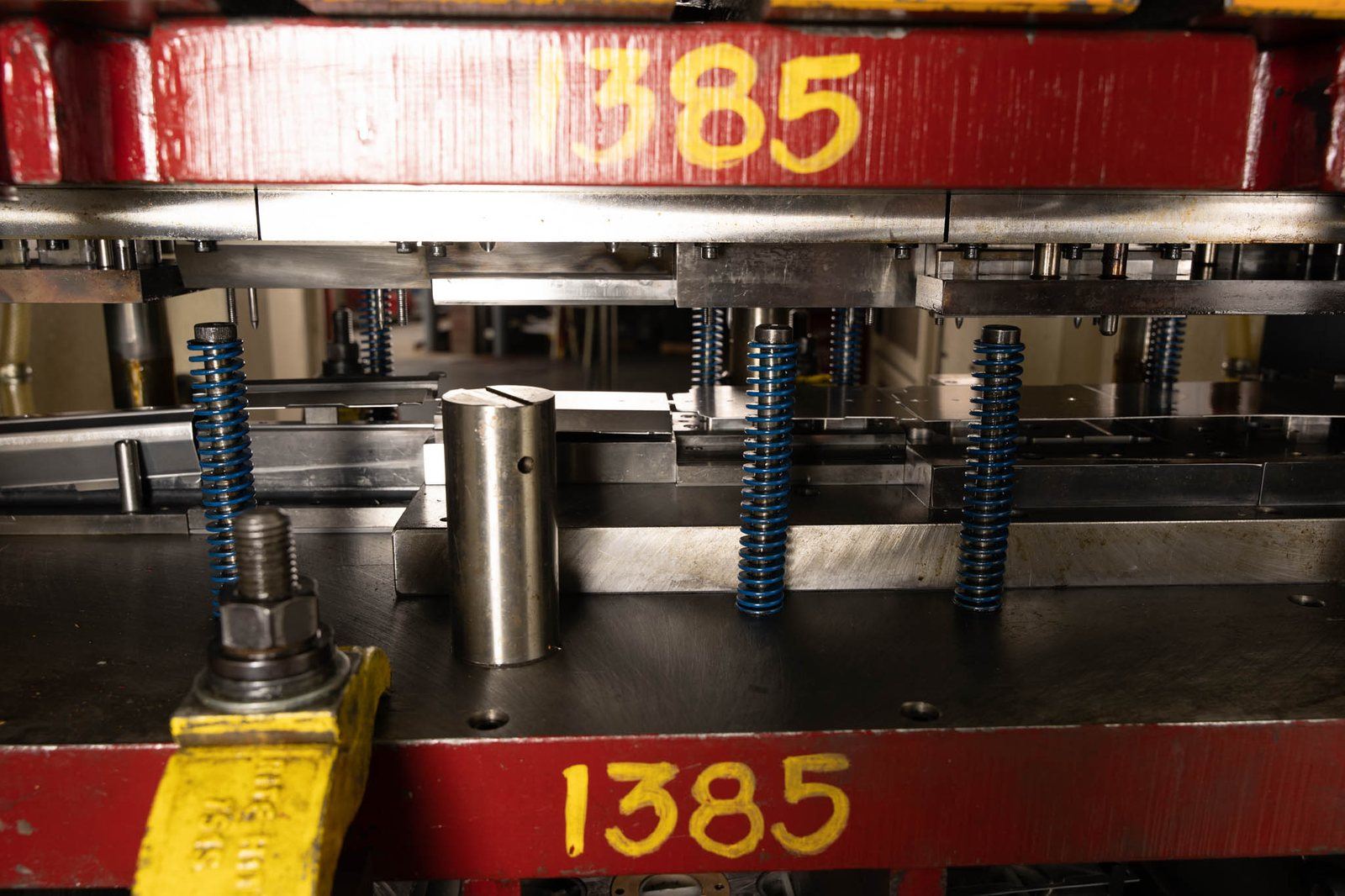
Precision in stamping is not a single number. It is whether the hundred thousandth part measures the same as the first one, and that is a tooling question far more than a press question.
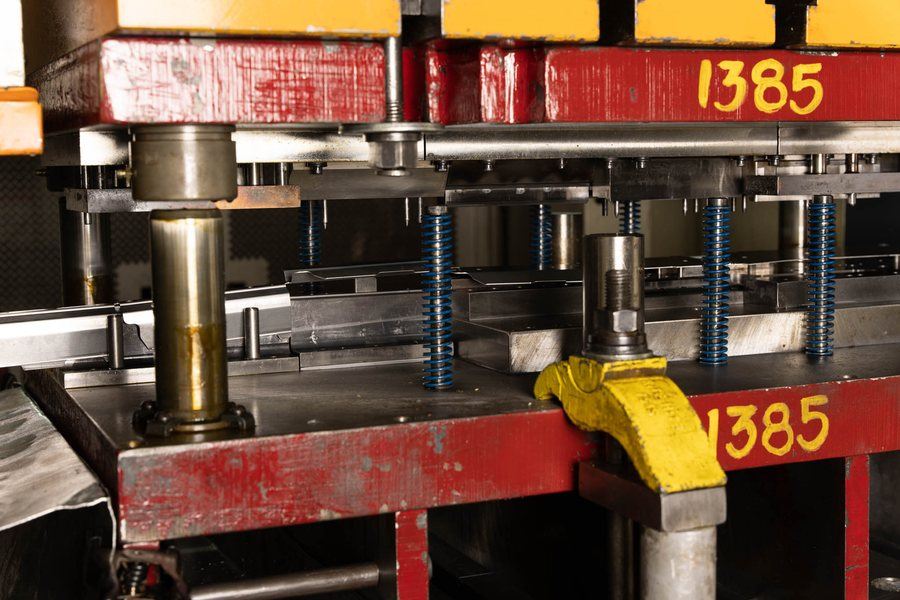
What actually holds a dimension
Three things, in order of how much they matter.
The die. Our tool room cuts die details on three Mitsubishi wire EDMs, a process capable of positioning to fifty millionths of an inch. That is the accuracy of the tool, not a tolerance we quote on a part, but a die cut that precisely starts its life square and stays square much longer.
Maintenance. A die that is not sharpened produces a burr that grows slowly enough that nobody notices until a customer does. Because sharpening and rebuilds are covered under our tooling guarantee, we have every reason to do them early and no reason at all to stretch an interval.
Monitoring. Feed and tonnage control on the production presses watches the force curve every stroke. A die going out of condition shows up as a change in tonnage before it shows up as a bad part.
What we will and will not claim
Across most stamped features, with well-designed tooling, plus or minus five thousandths of an inch. Tighter than that and machining is usually the right process, and we will tell you so rather than take the job and hope.
We would rather lose a quote than deliver a part that is nearly right. If your print has a feature that needs to be held tighter than stamping reliably holds, the useful conversation is whether that feature could be machined as a secondary operation — which we can do in house — rather than whether we can make a die do something dies do not do.
Verification
Parts are measured against your print on an OGP Flash 400 and a Micro-Vu video CMM, with Starrett SPC collection through the run rather than only at first article. You get data showing the dimension held, not an assurance that it did.
Common questions
What tolerances can you hold?
Plus or minus five thousandths of an inch across most stamped features with well-designed tooling. Tighter than that and machining is usually the right process, and we will tell you so.
How do you prove the parts are in spec?
Dimensional inspection against your print with SPC data collected through the run, on an OGP Flash 400 and a Micro-Vu video CMM.
Can you machine a feature that is too tight to stamp?
Yes. Machining as a secondary operation is done in house, so a part with one very tight feature does not need a second supplier.
Send us a print
Tell us the part, the material and the annual quantity. We will come back with a straight answer on tooling, lead time and price.
Open Monday through Friday.