Metal Stamping & Fabrication
Presses from 6 to 260 tons, single-stroke through high-speed coil-fed production, plus the secondary work that turns a stamping into a finished part.
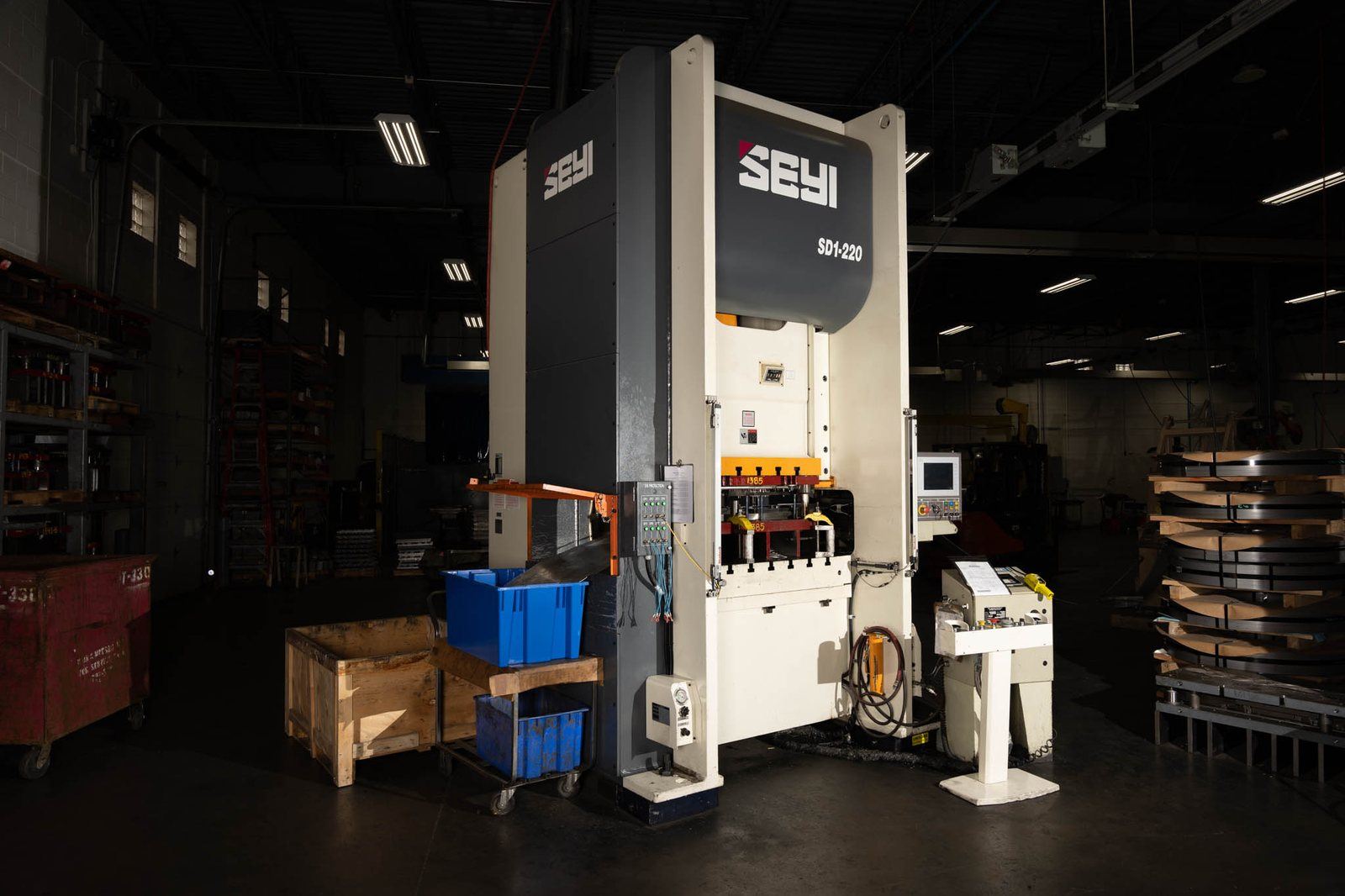
Presses from 6 tons to 260 tons, single-stroke through high-speed coil-fed production, and the secondary work that turns a stamping into a part you can actually put on a shelf.
That range is the point. A prototype run of two hundred and a production run of two hundred thousand are not different companies here, they are different machines in the same building, quoted by the same people.
Forming operations
Blanking, piercing, bending, lancing, flanging, hemming, embossing and coining. On a progressive die most of those happen in sequence in one pass through the tool, which is exactly why progressive tooling is cheaper to run and more expensive to build.
The presses
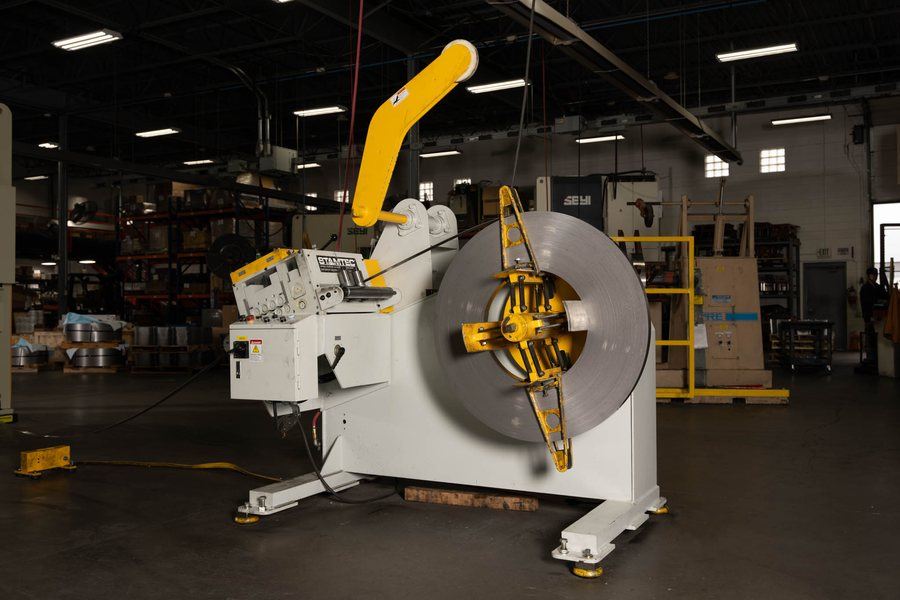
The heavy end is a 260 ton StamTech with feed and tonnage control, fed by a COE decoiler, straightener and feeder running .187 by 24 inch stock. Below that sit a 220 ton Seyi servo press, a 176 ton Seyi with a 12 inch Servomatic feeder, a 100 ton Clearing straight side, and a run of Bliss and Federal OBI presses from 94 down to 60 tons.
High-speed coil-fed work runs on a 75 ton Bliss HP2-75 and two 45 ton HP2-45s, all with feed and tonnage control and Servomatic feeds. Press brake work is on a 60 ton AccuPress and a 20 ton CNC AccuPress. And there are two US Baird #28 multi-slides for wire and strip parts that would take several operations on a press.
Feed and tonnage monitoring on the production presses is not a luxury. It is what tells you a die is starting to go before it makes a bad part, rather than after.
Secondary operations
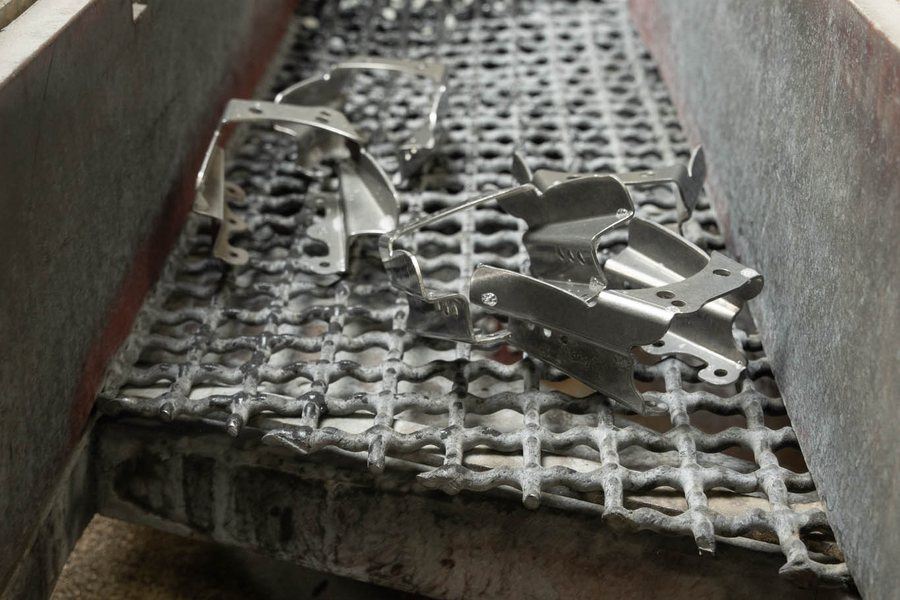
A stamping is rarely the finished item, and every hand-off to an outside vendor is a week of freight and a chance for something to go wrong. In house we run machining on a Brother Speedio machining center, welding including a Wolf robotic welder and a Taylor Winfield spot welder, PEM and stud insertion on a Haeger 618, tumble deburring and parts drying on Gemini 700 machines, and assembly.
Plating and painting are managed by us through vetted finishers, to MIL spec where the print calls for it.
Supply chain
We will build a program around how you actually order: managing inventory, packaging, labeling and shipping so parts are there when your line needs them, not three weeks early or two days late.
Common questions
What is your largest press?
A 260 ton StamTech with feed and tonnage control, fed by a COE decoiler, straightener and feeder handling .187 by 24 inch stock.
Do you do more than stamping?
Yes. Machining, welding including robotic welding, PEM insertion, deburring and assembly are all done in house. Plating and paint are managed by us.
Can you run both prototypes and production?
Yes, and on the same print. Prototypes come off soft tooling or machining, then move to production tooling when the quantity justifies it.
Send us a print
Tell us the part, the material and the annual quantity. We will come back with a straight answer on tooling, lead time and price.
Open Monday through Friday.